

New creative directors prove the power of honoring house heritage while rewriting fashion’s future.
The symbolism was unmistakable. When Sarah Burton presented her debut women’s collection as the new creative director of Givenchy in March of 2025, guests were seated on stools fashioned out of stacks of envelopes used to store garment patterns. They were just like the recently discovered batch from Hubert de Givenchy’s first collection, which were unearthed during a renovation of the atelier.
Burton was building on the legacy of Givenchy, the French couturier who famously dressed Audrey Hepburn—and those 1952 patterns hidden inside a wall were her lodestar.
But Burton’s collection was more than reverential in its nods to Givenchy’s sculptural silhouettes, bows, and crisp shirting. It was also modern, with sexy hourglass suiting, fishnet bodysuits, and a whimsical dress covered in makeup compacts seemingly designed for social media buzz. It was the perfect balance of past and present, even incorporating a bit of Burton’s recent history as a designer and creative director at Alexander McQueen in the delicate floral embroideries that brought her creation of Kate Middleton’s wedding gown to mind.
As fashion’s changing of the guard marches on, how brands manage a creative director transition is a delicate dance. “The heritage of a house is very important. It’s about keeping that message clear but then giving the customer something new,” said Robert Burke, founder and CEO of fashion consultancy Robert Burke Associates.
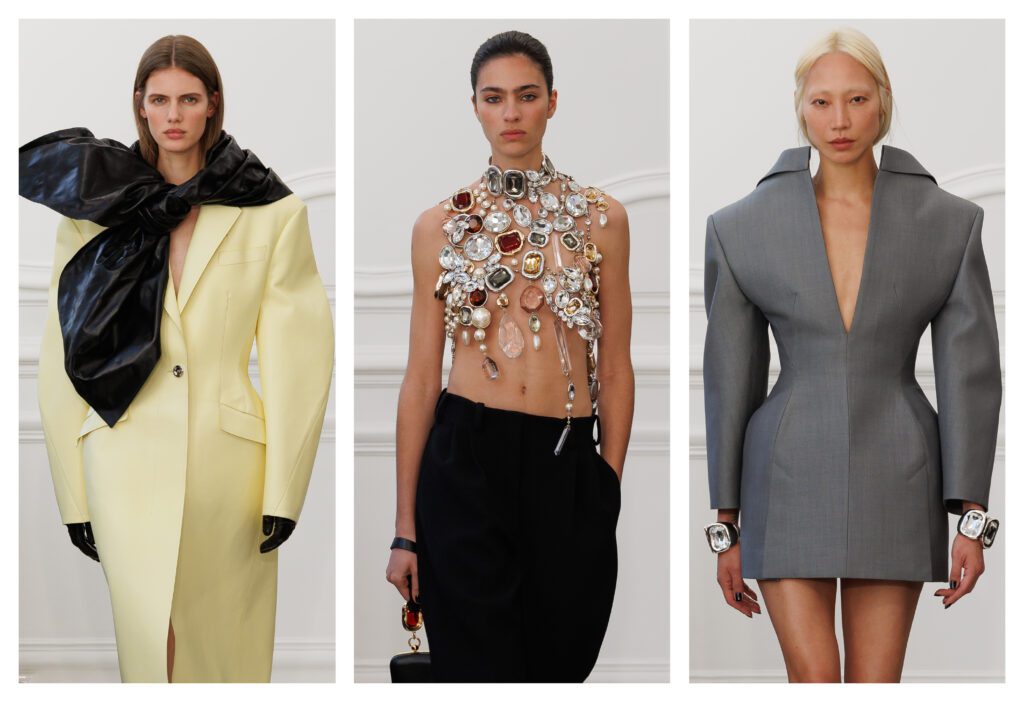
Looks from Givenchy’s fall/winter 2025 runway show (Photos courtesy of Givenchy)
It’s important to carry over well-known design codes. Gucci has horse bits, CHANEL has its tweed, and Valentino has its classic red. Loewe honored Jonathan Anderson’s whimsy and radical expressiveness that he established during his tenure there and published the monograph “Crafted World: Jonathan Anderson’s LOEWE” so his successors and fans can carry on the legacy of the brand he took from 230 million to more than one billion euros in sales.
Other brands have less-defined brand DNA, offering a cleaner slate for new creative directors. Take Tom Ford, who was widely associated with his heyday at Gucci in the 1990s and early 2000s. The codes of his own namesake fashion brand, which is decades younger than its luxury peers, are still being written.
So, when Haider Ackermann debuted his first collection as Tom Ford’s creative director, he paid light homage to Ford’s Gucci-era hedonism with provocative gowns and his menswear flair in boom-boom 1980s power suits. Ackermann also carefully injected some of his own sultry silhouettes to chart a future course.
Cultivating new generations of customers is paramount for any brand, which means melding heritage with the current moment. For fall 2025, new Valentino creative director Alessandro Michele appealed to style aficionados by debuting a Vans sneaker collaboration on the runway, mixed with his own trademark gender-blending and the house founder’s ruffled evening wear.
However, the work of introducing a new creative director begins long before a collection walks the runway. Timothée Chalamet wore a custom Givenchy suit on the Oscars red carpet in the same shade of butter yellow that came down the brand’s catwalk as a dress a week later.
Michele was not the only new creative director he helped boost during awards season. At the Golden Globes, Chalamet wore the first Haider Ackermann for Tom Ford suit. “Brands realize now that there are probably more eyeballs on celebrities on the red carpet than on their runway shows,” explained Burke.
There’s also the carefully calibrated pacing of announcing new creative directors to consider, waiting until the current one has completed the job before naming a replacement—even if it creates rumors and speculation.
For example, it was rumored that Dior’s new head of men’s wear, Jonathan Anderson, would also take over women’s wear and couture from Maria Grazia Chiuri as she was suspected to depart after her 2026 cruise collection was presented in May—all of which turned out to be true. After nine years of leadership, Chiuri stepped down, and Dior swiftly announced Anderson as the brand’s creative director of men’s wear, women’s wear, and couture—marking the first time since Christian Dior himself that a single designer has overseen all aspects of the brand.