
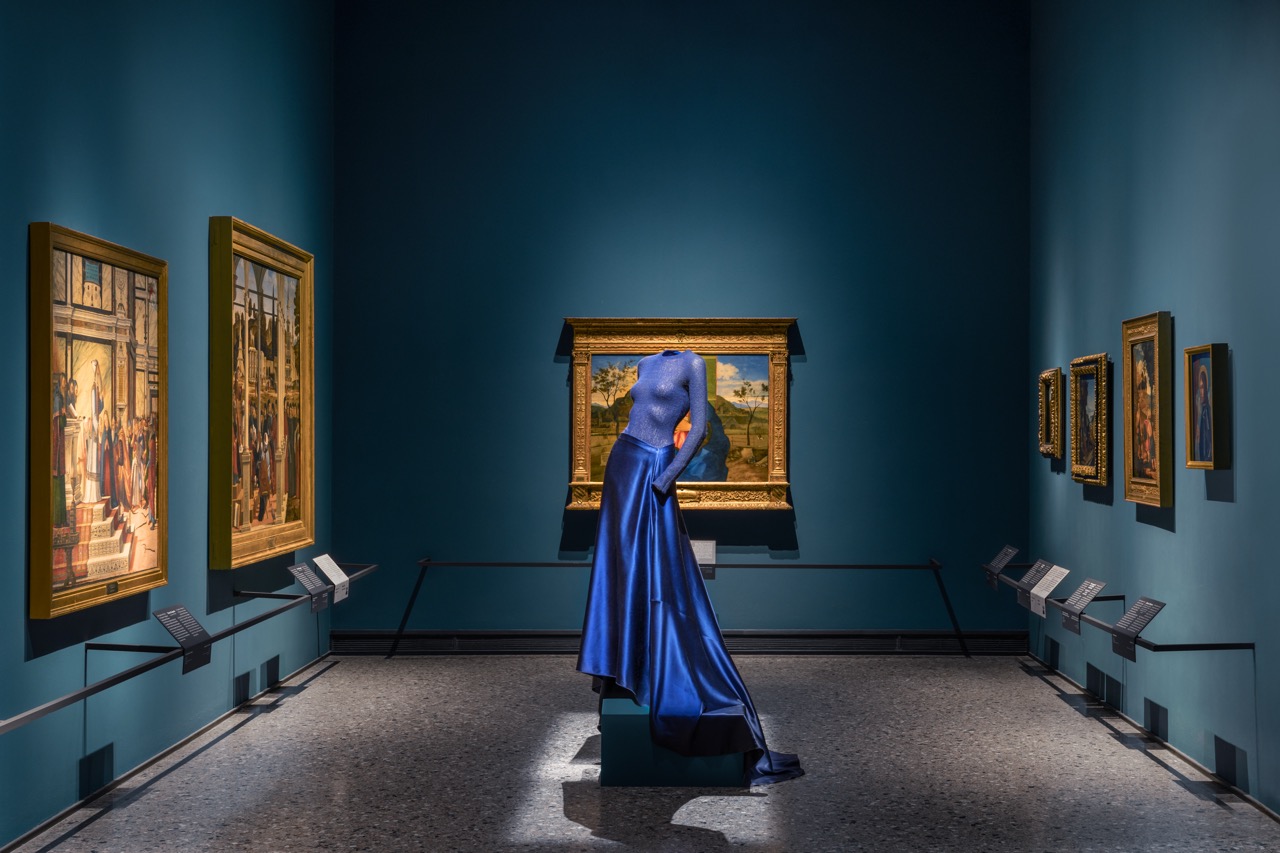
Luxury houses are deepening consumer bonds by building brand worlds that live off the runway.
According to the 2024 Bain-Altagamma Luxury Goods Worldwide Market Study, the desire for luxury goods contracted for the first time in 15 years. Yet the demand for luxury experiences—particularly travel, art, and other more intangible offerings—has surged, maintaining a faster-than-average growth rate. Fashion houses have responded to this demand by shifting from transactional consumer relationships to immersive brand worlds that offer long-lasting emotional resonance, not just products.
While fashion houses have long offered full-blown experiences—such as the newly opened House of Dior New York—brands are increasingly engaging consumers at every turn. Smaller-scale activations illustrate this trend: Dolce&Gabbana’s partnership with Le Carillon in Portofino; Missoni’s takeover of Hôtel Swexan in Dallas; and Dior’s Mediterranean pop-ups featuring branded buoys, floats, and AR filters for on-the-spot virtual try-ons. These exclusive moments create urgency and foster loyalty, giving consumers a sense of “you had to be there.”
Branded dining experiences offer another avenue for immersion.
Ralph Lauren’s global restaurants, Tiffany & Co.’s Blue Box Café by Daniel Boulud in New York, Louis Vuitton’s Café V and restaurant Sugalabo V in Osaka, and Prada’s forthcoming Prada Caffè in NYC’s SoHo let guests taste the brand—literally. By entrusting house codes to chefs, these luxury brands are infusing their design, ethos, and style into a full sensory experience, converting casual visitors into loyal patrons.
Brand world-building is also found when fashion intersects with luxury real estate through hotels and residences. Branded properties include opportunities for Fendi, Porsche, Aston Martin, Baccarat, Armani, and major hotel chains like Four Seasons. Each residence is held to a brand’s design and hospitality standards, signifying through name alone its level of service and care.
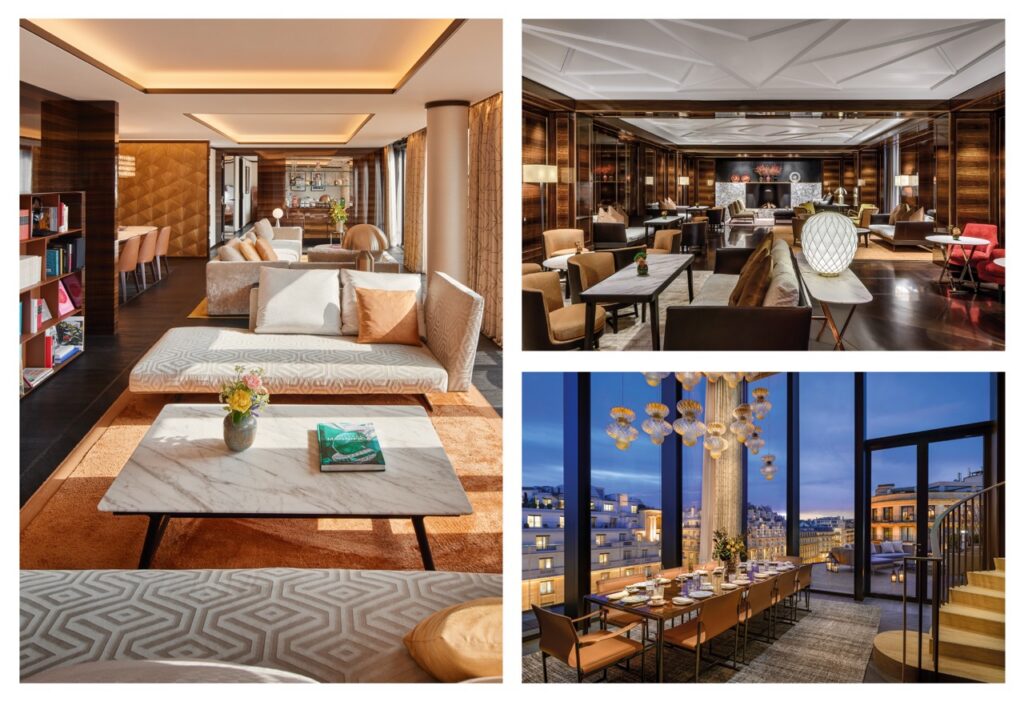
Left: Living room of the BULGARI Suite at BULGARI Hotel Paris, Photo courtesy of Bulgari Hotels & Resorts; Top Right: Il Lounge at BULGARI Hotel Paris, Photo courtesy of BULGARI Hotels & Resorts; Bottom Right: Penthouse dining room at BULGARI Hotel Paris, Photo courtesy of BULGARI Hotels & Resorts
Bulgari, for instance, has a growing network of hotels, with openings in the Maldives and Bodrum, Turkey, slated for 2026 and 2027, respectively. Versace’s Palazzo Versace Macau and Armani Hotel Milano, with its ARMANI/SPA, further illustrate this approach.
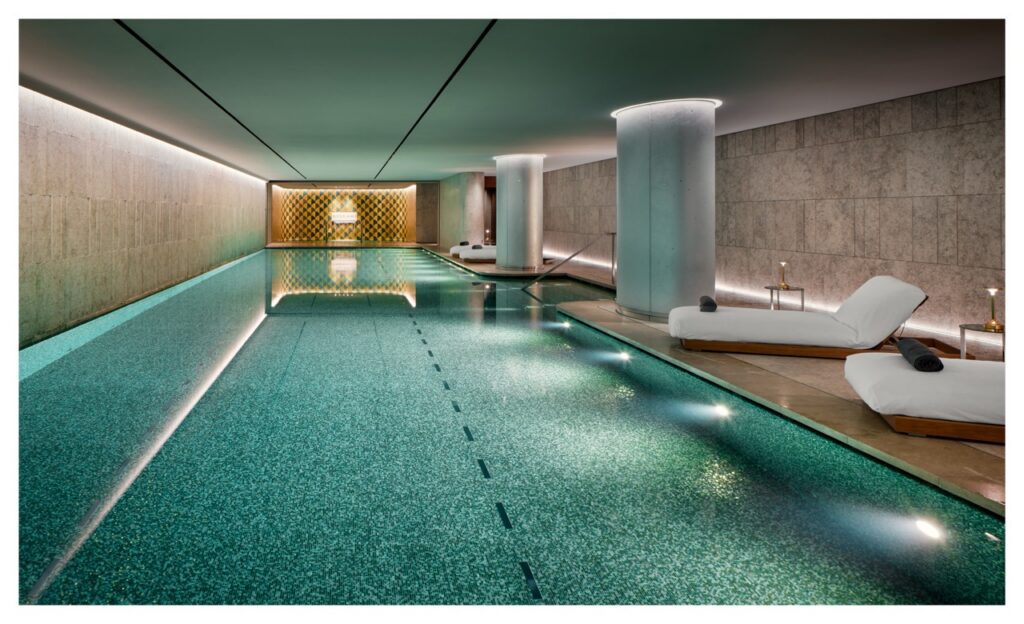
BULGARI Spa Paris unveils a dazzling emerald-hued pool inspired by ancient Roman baths; Photo courtesy of Bvlgari Hotels & Resorts
Even smaller brands like Louboutin have entered the space. His design philosophy drives Vermelho Melides, a 13-room Portuguese hotel, where even the smallest flourish echoes his instantly recognizable design codes. Perhaps one of the most anticipated openings is Louis Vuitton’s 64,000-square-foot Champs-Élysées hotel, set to open in 2026. It’s housed in an Art Nouveau building next to its boutique and is slated to be a monumental embodiment of the brand’s attention to detail.
Art has become a natural extension of this approach as well. Exhibitions like “Louis Vuitton: Visionary Journeys” in Osaka and Shanghai, which celebrates 20 years of collaboration with Takashi Murakami, and “Louis Vuitton Art Deco” in Paris, which opened in September of 2025, turn brand storytelling into museum-worthy experiences. Highly curated, these exhibitions elevate brand heritage and create exclusivity around archival treasures.
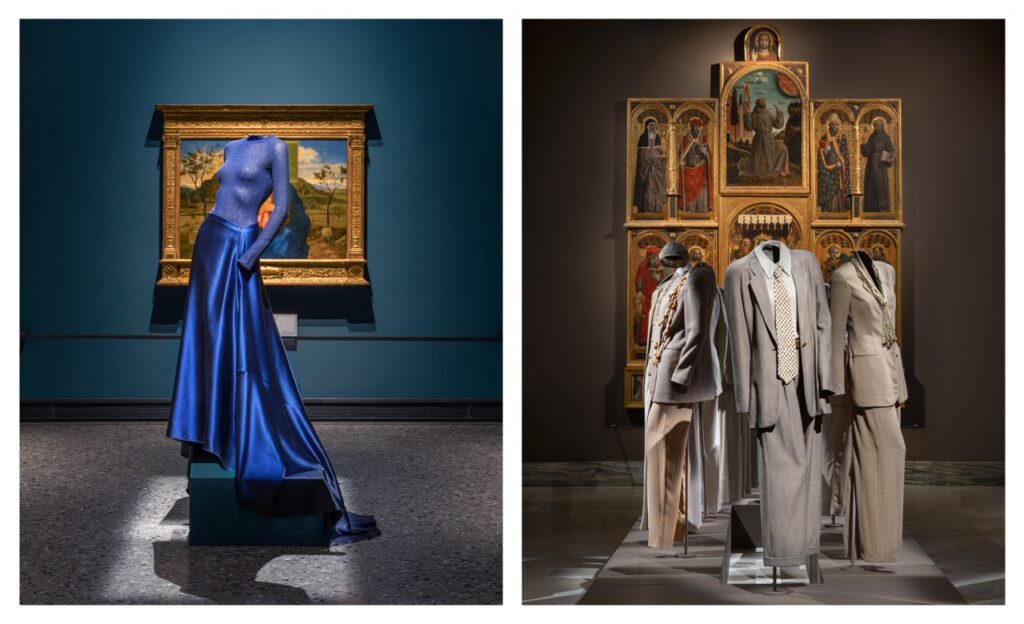
Left: Giorgio Armani: Milano Per Amore at the Pinacoteca di Brera. Credit: Photo by Agnese Bedini and Melania Della Grave/DSL Studio; Right: Creations by Giorgio Armani on display at the Pinacoteca di Brera in Milan, celebrating the fashion house’s 50th anniversary. Credit: Photo by Stefano Rellandini/AFP Via Getty Images
Giorgio Armani’s legacy underscores this trend. Following his passing in September of 2025, a retrospective at Milan’s Pinacoteca di Brera positioned his work within the continuum of Italian art history. Angelo Crespi, the museum’s general director, noted: “Giorgio Armani represents one of the highest pinnacles of Italian creativity, expressed in the essentiality and rigour of form, a rigour that evolved from aesthetic to the sense that it permeated his way of living and working. In this, Giorgio Armani embodies the character of Milan most fully. He is also the most emblematic expression of the culture of Brera, a unique place in the world where art, research, and innovation have been practiced for five hundred years.” This synthesis of fashion and fine art deepens Armani’s cultural capital, ensuring the maison’s purpose, relevance, and longevity after the passing of its inimitable founder.
For consumers, these various immersive experiences—from carpets to amuse-bouches—are delightfully indulgent. For brands, they’re strategic. Engaging consumers through emotion, design, and sensory storytelling builds loyalty that endures beyond market fluctuations. Luxury has always dabbled in world-building; today, it does so with full weight, crafting relationships that are as lasting as the products themselves.